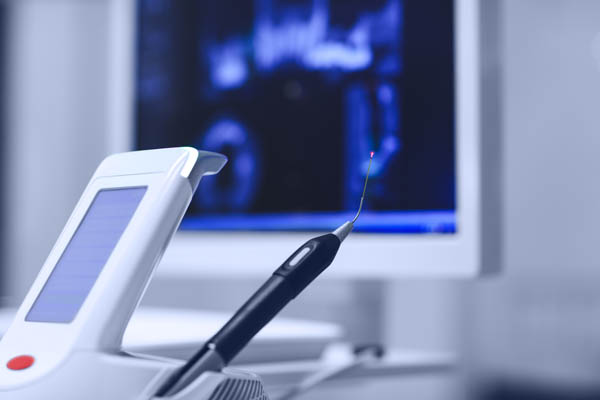
The Laser-Assisted Peri-Implant Procedure, or LAPIP™, is the only FDA-approved laser treatment for dental implant issues. You would probably expect your dental implants to last a lifetime, and this expectation is in order. However, there are potential risks to dental implants' longevity. Peri-implantitis, or infection around an implant, may occur when patients do not maintain excellent oral health care. Fortunately, peri-implantitis can be treated, especially if the infection is caught early. Continue reading to learn about peri-implantitis, and how LAPIP is used to treat dental implants.
How is LAPIP™ used for treating implants?
Peri-implantitis is a kind of infection that is similar to periodontitis or advanced gum disease. The gums and supporting tissues in the oral cavity become infected and inflamed, causing the gums to bleed when brushing. Pockets of bacteria grow below the gum line as the condition advance, creating pockets that house germs and debris, aggravating the infection. Peri-implantitis can cause bone loss, which might jeopardize the stability of your implant.
Peri-implantitis is a degenerative disorder that cannot be managed at home, so patients should get treatment once they experience signs of the condition. If the condition is not present, the same daily oral hygiene routine that helps prevent gum disease can also help guard against peri-implantitis. Brush and floss every day, and visit the dentist regularly. Also, some lifestyle decisions, like smoking, might raise the risk of gum infections.
Peri-implantitis is distinct because it is a localized infection that can only develop around an implant rather than a natural tooth. It is also difficult to identify early. Most patients are unaware that they have an infection until they develop significant symptoms. An x-ray most commonly reveals peri-implantitis during a routine dental examination.
The LAPIP protocol and dental implant infection
There are numerous treatment options for dental implant infections. The most frequent methods are surgery or laser procedures, with laser therapy being the least invasive of the two.
At the implant base, a tiny laser is placed beneath the gums, where it targets and kills bacteria and diseased tissue. After that, ultrasonic instruments are used by the periodontist to remove any residual bacteria and ensure that the implant is completely clear of potentially harmful remnants. Finally, the laser is inserted beneath the gum line again to kill any bacteria that have survived. This process allows the gums to recover and reattach to the implant again.
LAPIP therapy has several advantages. To begin with, it is less intrusive than surgery and does not damage healthy gum tissue. The laser was created particularly to target diseased tissue. This therapy is highly efficient and fast. Finally, the laser stimulates gum and bone growth so that the density and mass of the natural bone can increase without the need for a bone graft, ensuring the implant's long-term stability.
The bottom line
Please call contact a periodontist if you have implants and suspect you have peri-implantitis. The LAPIP™ protocol ensures quick healing and recovery with minimal downtime.
Request an appointment here: https://corderoperiodontics.com or call Rafael E. Cordero, DDS PA at (561) 437-3707 for an appointment in our Palm Beach Gardens office.
Check out what others are saying about our services on Yelp: Read our Yelp reviews.
Recent Posts
Gum grafting is a specialized treatment that restores receding gums, protects tooth roots, and helps prevent long-term dental problems. If you’ve noticed your gums pulling back or your teeth looking longer, it may be time to visit a periodontist in Loxahatchee, FL. Gum grafting is a common periodontal procedure used to treat gum recession and…
Dental implants provide a long-lasting, natural-looking solution for missing teeth, helping restore both your smile and self-confidence. Missing teeth can affect more than just your appearance—they can impact how you speak, eat, and feel about yourself. Many patients choose dental implant surgery in Palm Beach Gardens to regain a complete, confident smile. This advanced treatment…
Osseous surgery is a precise periodontal procedure designed to treat advanced gum disease by reshaping damaged bones and restoring a healthier foundation for your teeth.Gum disease can progress beyond what non-surgical treatments can manage, especially when infection reaches the supporting bone. For patients considering advanced care, osseous surgery in Palm Beach Gardens offers a targeted…
Gum disease can progress quietly, often without noticeable pain, until it reaches an advanced stage. For patients exploring modern treatment options, LANAP in Palm Beach Gardens offers a laser-based approach that targets infection while promoting natural healing. LANAP offers a minimally invasive, highly precise way to treat gum disease while preserving healthy tissue and supporting…